
Best Prenatal Vitamins of 2026
We ranked prenatal vitamins on folate versus CDC guidance, iron and DHA, third-party testing, first-trimester nausea, and monthly cost.
Typical searches — best prenatal vitamins, when to start, folic acid vs folate, DHA, nausea — sit on the same CDC baseline: 400 mcg of folic acid (or equivalent folate) daily, ideally before a positive test, because neural-tube development happens in the first weeks. We ranked five prenatals against that baseline plus iron, iodine, vitamin D, DHA, third-party testing, and whether you can keep taking the pill when nauseous: Ritual Essential Prenatal, FullWell Prenatal Multivitamin, Garden of Life My Kind Organics Prenatal, Nature Made Prenatal Multi + DHA, and One A Day Women's Prenatal 1. Five bottles. Not a fabricated 30-product lab panel.
Filter Results
Filter Results
Showing 5 of 5 results
- 1
9.2
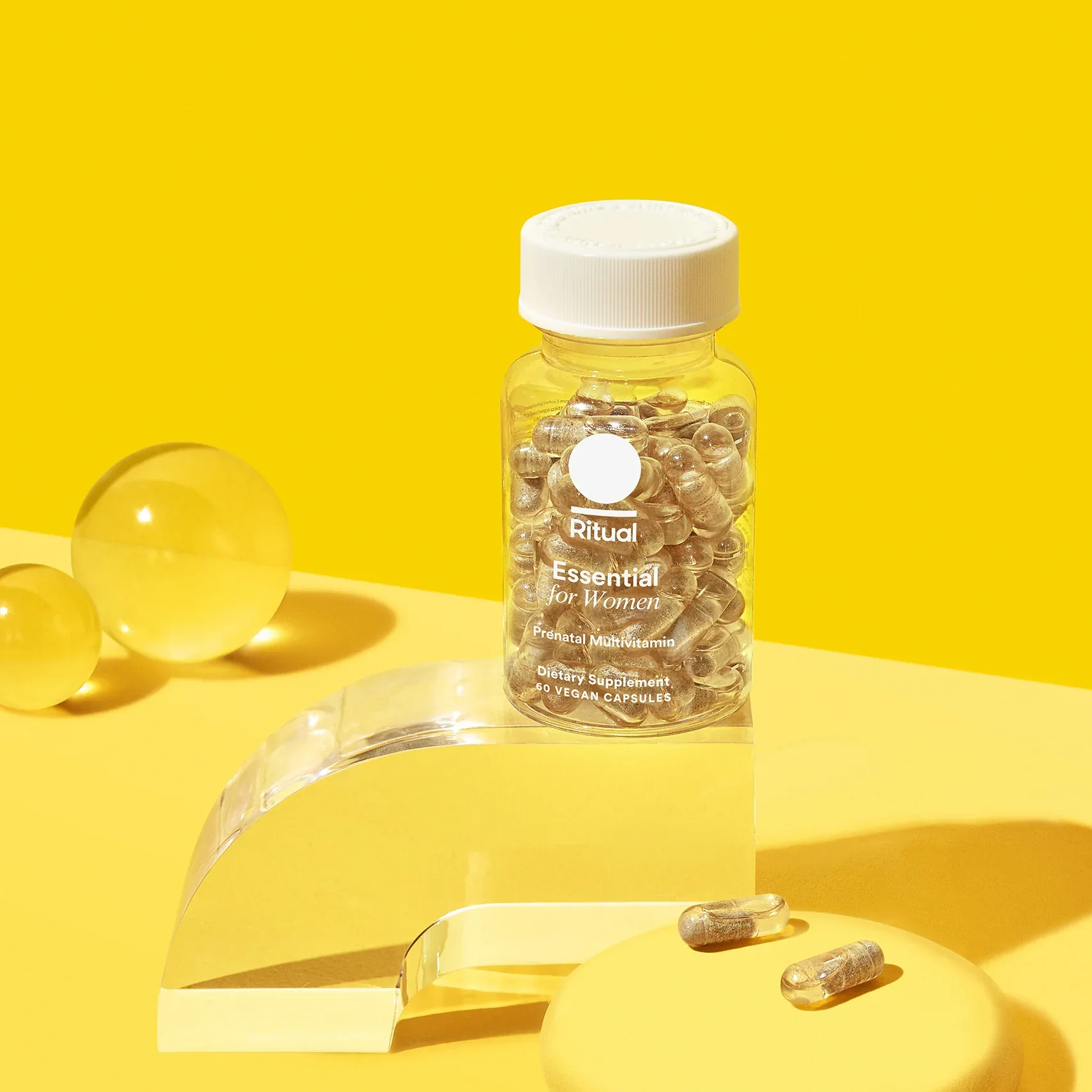
Best Overall$35/monthBest Overall
Best Overall
$35/monthat direct
- Uses methylated folate (5-MTHF) instead of synthetic folic acid for superior absorption
- Delayed-release capsule with mint essence is genuinely easy on a queasy stomach
Traceable ingredients, gentle on an empty stomach
Ritual Essential Prenatal stands out for its transparent supply chain, clinically studied forms of key nutrients, and a delivery system designed to minimize nausea. It's the best choice for most pregnant women, though those with iron-deficiency anemia will need to supplement separately.
Read the full Ritual Essential Prenatal review →Pros
- Uses methylated folate (5-MTHF) instead of synthetic folic acid for superior absorption
- Delayed-release capsule with mint essence is genuinely easy on a queasy stomach
- Full ingredient traceability — you can see exactly where each nutrient comes from
Cons
- Lacks iron, which some pregnant women need in supplemental form
- Monthly subscription model required for best pricing
Score Breakdown
Nutrient Quality9.4Bioavailability9.3Third Party Tested9.5Value8.4 - 2
9.0
$52/monthRunner-Up
Runner-Up
$52/monthat direct
- Most comprehensive nutrient profile tested — includes choline, which most prenatals skip
- All nutrients in their most bioavailable forms, including methylfolate and vitamin D3
The most complete prenatal formula on the market
FullWell is the gold standard for nutrient completeness, particularly for its inclusion of choline — a critical nutrient for fetal brain development that most prenatals omit. It's the top pick for those who want to leave nothing to chance, budget permitting.
Read the full FullWell Prenatal Multivitamin review →Pros
- Most comprehensive nutrient profile tested — includes choline, which most prenatals skip
- All nutrients in their most bioavailable forms, including methylfolate and vitamin D3
- NSF Certified for Sport — one of the most rigorous third-party certifications available
Cons
- 8 capsules per day is a significant daily commitment
- Premium price is the highest in this roundup
Score Breakdown
Nutrient Quality9.8Bioavailability9.5Third Party Tested9.4Value7.6 - 3
8.7
~$30Best Value
Best Value
~$30at amazon
- USDA Certified Organic and Non-GMO Project Verified
- Nutrients derived from whole foods, not synthetic isolates
Whole-food certified organic prenatal
Garden of Life's whole-food prenatal is the best option for expectant mothers who prioritize organic, food-derived nutrition. Multiple certifications add a strong layer of trust, and the price is highly competitive for the quality delivered.
Read the full Garden of Life My Kind Organics Prenatal review →Pros
- USDA Certified Organic and Non-GMO Project Verified
- Nutrients derived from whole foods, not synthetic isolates
- NSF Certified and Certified B Corporation for added trust
Cons
- 3 tablets per day spread across meals adds complexity
- Lower iron and DHA content compared to top picks
Score Breakdown
Nutrient Quality8.8Bioavailability8.5Third Party Tested9.0Value9.1 - 4
8.1
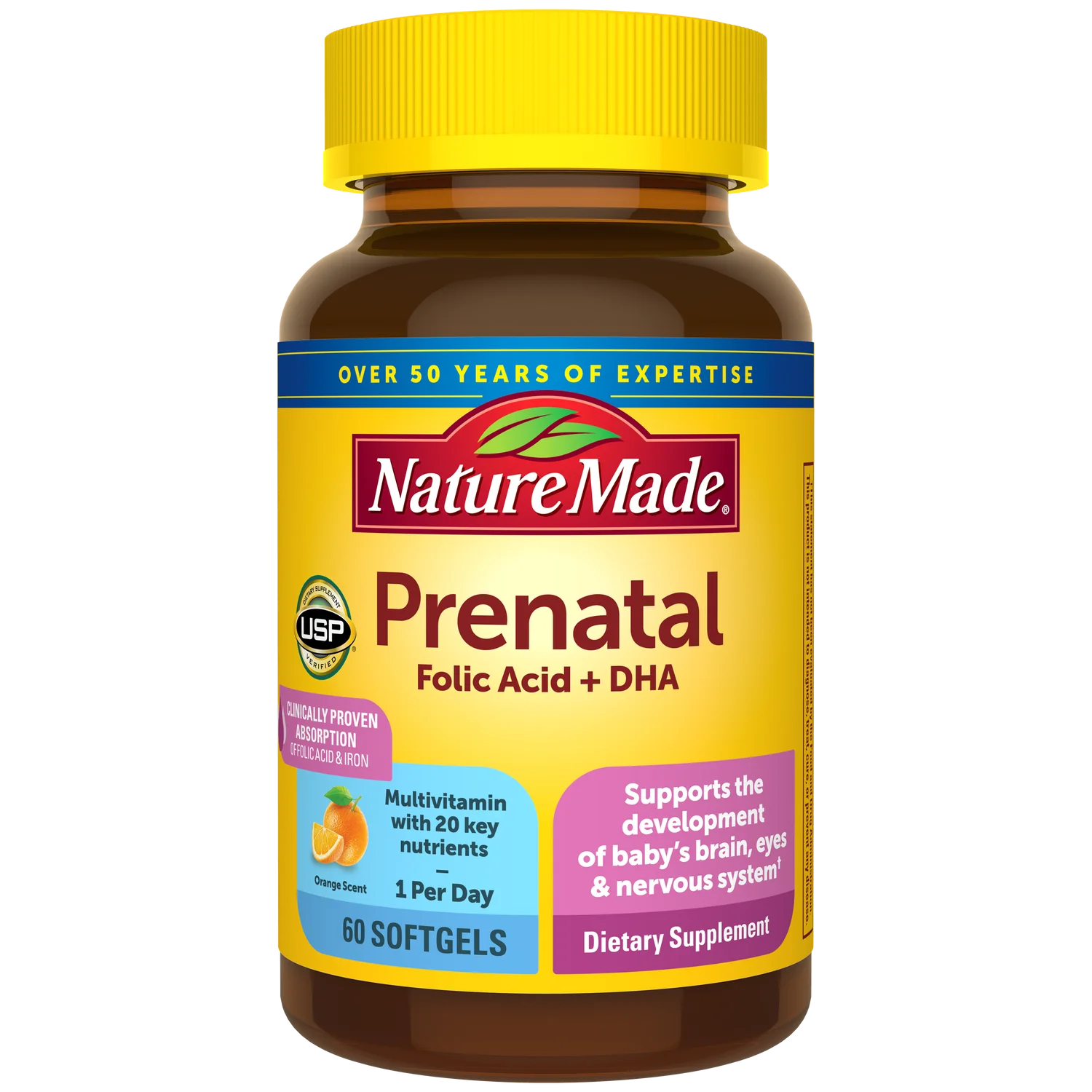
~$20Pharmacist-recommended and widely accessible
Pharmacist-recommended and widely accessible
~$20at amazon
- USP Verified — one of the most recognizable third-party quality seals
- Includes 200mg DHA in a separate softgel for fetal brain development
Pharmacist-recommended and widely accessible
Nature Made is the dependable, widely available prenatal that earns its place through USP verification and broad accessibility. It's an excellent choice for budget-conscious mothers, with the caveat that the synthetic folic acid form may not be ideal for those with MTHFR gene variants.
Read the full Nature Made Prenatal Multi + DHA review →Pros
- USP Verified — one of the most recognizable third-party quality seals
- Includes 200mg DHA in a separate softgel for fetal brain development
- Available at virtually every pharmacy and grocery store
Cons
- Uses folic acid instead of the more bioavailable methylfolate form
- Synthetic nutrient forms throughout may be less well absorbed
Score Breakdown
Nutrient Quality7.8Bioavailability7.5Third Party Tested8.6Value9.3 - 5
7.5
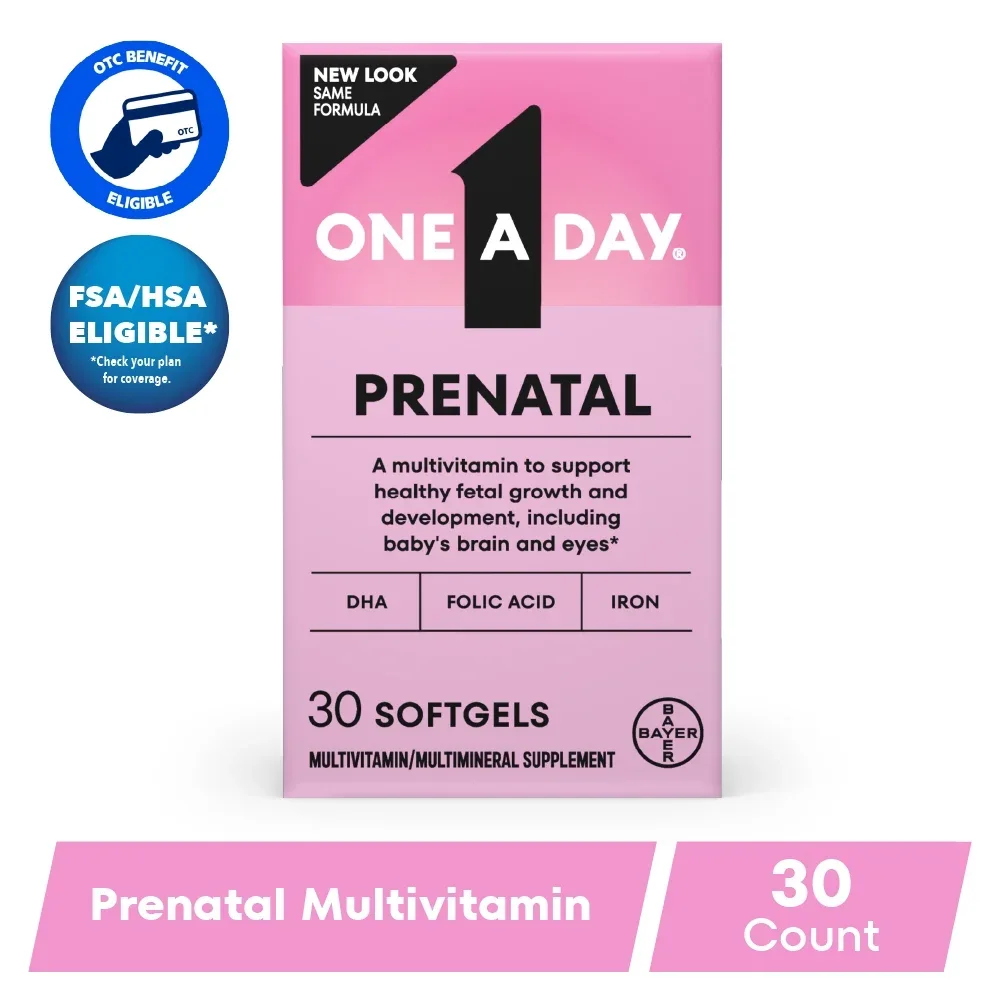
~$15Simple one-pill convenience at the lowest price
Simple one-pill convenience at the lowest price
~$15at amazon
- Single softgel per day is the easiest routine of any option tested
- Most affordable prenatal in this roundup by a wide margin
Simple one-pill convenience at the lowest price
One A Day Women's Prenatal 1 wins on pure convenience and affordability. While it doesn't match the nutrient quality of higher-ranked options, it covers the essential bases in a single softgel — making it a reasonable fallback when budget or pill fatigue are factors.
Read the full One A Day Women's Prenatal 1 review →Pros
- Single softgel per day is the easiest routine of any option tested
- Most affordable prenatal in this roundup by a wide margin
- Includes DHA and folic acid in one convenient dose
Cons
- Nutrient doses are lower than clinical recommendations in several key areas
- Uses synthetic folic acid and lower-grade forms of several nutrients
Score Breakdown
Nutrient Quality7.2Bioavailability7.0Third Party Tested7.8Value9.5

Prenatal Vitamins Buying Guide
Why do prenatal vitamins matter so early?
Prenatal vitamins exist because early pregnancy has nutritional stakes that food alone reliably misses — most famously folic acid, which the CDC recommends starting before conception because it helps prevent neural-tube defects that form in the first weeks, often before a positive test. A good prenatal is cheap insurance for the baby’s development and the mother’s depleted stores. The differences between brands — forms, extras, tolerability — matter; the habit of taking one matters more.
What to look for
The CDC-recommended baseline
The non-negotiable is 400+ mcg of folic acid (or equivalent folate) daily, ideally starting before conception per CDC guidance. Every ranked prenatal meets it; confirm any product you choose does.
The key-nutrient checklist
Beyond folate: iron, iodine, vitamin D, and DHA (for fetal brain and eye development) are the nutrients mainstream guidance emphasizes. Some prenatals include DHA; others pair with a separate softgel — either works, but count it.
Forms your body tolerates
First-trimester nausea kills vitamin habits. Smaller pills, food-based formulations, and taking with evening food all help — the best prenatal is the one you keep taking.
Third-party verification
Supplements aren’t FDA-approved like drugs, so independent verification (USP and similar marks) that the bottle contains what it claims is worth prioritizing. Several ranked picks carry it.
Methylated folate versus folic acid, calmly
Both meet the guidance for most people. If you have reason to care (a known MTHFR consideration), that’s a conversation for your provider — not a reason to pay triple on marketing fear.
Price per month, honestly
Prenatals range from drugstore-affordable to boutique-subscription. The evidence supports the checklist above, not the price tag — pay more for tolerability and verification you value, not for aspirational branding.
Our shortlist of 5
Related rankings
Frequently Asked Questions
When should I start taking prenatal vitamins?
Before pregnancy if you can. The CDC recommends folic acid daily for anyone who could become pregnant, because neural-tube development happens in the first month — often before a test turns positive. Start when you start trying, and start the day you find out if the pregnancy is a surprise. Starting late is still worth it.
What should I look for in a prenatal vitamin?
Confirm 400+ mcg folic acid or equivalent folate, then check iron, iodine, vitamin D, and DHA (included or paired). Third-party marks such as USP help because supplements are not FDA-approved like drugs. The best prenatal is the one you keep taking through nausea — pill size and timing matter as much as the label.
Are expensive prenatal vitamins better?
Not inherently. The nutrients that matter are well established and present in drugstore prenatals that hit the checklist. Premium brands on our five-item list compete on methylfolate, choline, cleaner formulations, and testing — worth paying for if nausea or those extras matter to you. Compare labels, not vibe.
Folic acid or methylfolate — does it matter?
Both meet mainstream guidance for most people. Some prenatals we ranked use methylated folate (5-MTHF); others use folic acid. If you have a known MTHFR consideration, that is a conversation with your provider — not a reason to assume a triple-price bottle is required.
What if prenatal vitamins make me nauseous?
Very common in the first trimester. Try taking it with your largest meal or at bedtime, switching to a smaller or delayed-release capsule (Ritual is built for that), or splitting doses if the label allows. If nothing stays down, tell your provider rather than quietly quitting — they can keep folate coverage while your stomach settles.
Our Ranking Methodology
We ranked 5 prenatal vitamins. Criteria: folate dose against CDC guidance; coverage of iron, iodine, vitamin D, choline, and DHA (in the formula or as a paired softgel); third-party verification such as USP or NSF; first-trimester tolerability (pill count, delayed-release, food-based options); and monthly cost. Nutrient claims follow ACOG/CDC-style checklists, not invented clinical trials. We did not invent extra products.
Learn more about how we test and score →