
Best Baby Formula of 2026
We ranked baby formulas on FDA nutrition, ingredients, digestibility, U.S. store availability, and cost per prepared ounce for newborns.
Best baby formula searches usually mean Similac vs Enfamil, store brand vs name brand, organic, or how to switch. Every infant formula legally sold in the U.S. must meet the same FDA nutrient and safety requirements, and the American Academy of Pediatrics treats regulated store brands as nutritionally equivalent to name brands. We ranked five formulas parents actually look up: Similac Pro-Advance, Enfamil NeuroPro, HiPP Organic, Bobbie Organic, and Earth's Best Organic. Criteria: nutrition on top of the FDA floor, ingredients, how easy they are to find, and cost per prepared ounce. Five options on the list — not a pretend panel of forty.
Filter Results
Filter Results
Showing 5 of 5 results
- 1
9.3
Best Overall~$35/can (20.1 oz)Best Overall
Best Overall
~$35/can (20.1 oz)
- Contains 2'-FL human milk oligosaccharide (HMO), a prebiotic found in breast milk that supports immune development
- Available in virtually every grocery store, pharmacy, and online retailer nationwide
The most widely trusted infant formula with 2'-FL HMO for immune support
Similac Pro-Advance has earned its place as America's most recommended formula through decades of clinical use, consistent quality, and its inclusion of 2'-FL HMO — a breakthrough prebiotic previously found only in breast milk. Its unmatched retail availability is a meaningful practical advantage, especially in supply-uncertain environments.
Read the full Similac Pro-Advance review →Pros
- Contains 2'-FL human milk oligosaccharide (HMO), a prebiotic found in breast milk that supports immune development
- Available in virtually every grocery store, pharmacy, and online retailer nationwide
- OptiGRO blend of DHA, lutein, and vitamin E supports brain and eye development with a strong clinical evidence base
Cons
- Corn syrup solids appear relatively high in the ingredient list, which some parents prefer to avoid
- Not certified organic, which is a dealbreaker for families prioritizing organic sourcing
Score Breakdown
Nutritional Profile9.4Ingredient Quality9.0Digestibility9.2Availability9.8Value8.9 - 2
9.2
~$38/can (20.7 oz)Runner-Up
Runner-Up
~$38/can (20.7 oz)
- Dual MFGM and DHA blend is backed by a clinical study showing cognitive development advantages at 12 months
- Fat blend designed to mirror breast milk fat structure, supporting both digestion and nutrient absorption
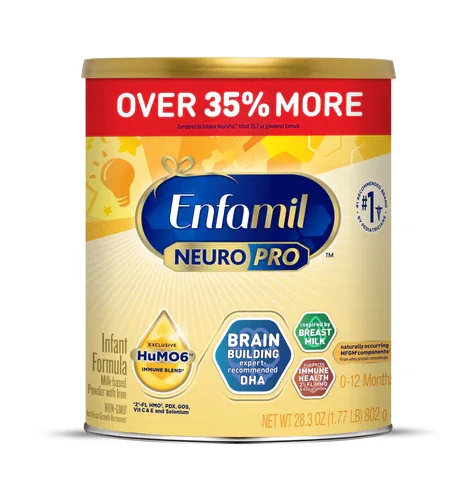
Clinically proven MFGM and DHA combination for brain development
Enfamil NeuroPro's MFGM addition gives it a genuine clinical differentiation from standard DHA-only formulas, with peer-reviewed research supporting its brain development claims. For parents who prioritize the most science-backed nutritional profile available, NeuroPro is a compelling choice that runs neck-and-neck with Similac at the top of the market.
Read the full Enfamil NeuroPro review →Pros
- Dual MFGM and DHA blend is backed by a clinical study showing cognitive development advantages at 12 months
- Fat blend designed to mirror breast milk fat structure, supporting both digestion and nutrient absorption
- Widely available in stores and through the Enfamil Family Beginnings program which offers discounts and samples
Cons
- Slightly higher price per ounce than Similac Pro-Advance with comparable core nutrition
- Some sensitive babies experience more gas with this formula compared to partially hydrolyzed alternatives
Score Breakdown
Nutritional Profile9.5Ingredient Quality9.1Digestibility9.0Availability9.6Value8.7 - 3
9.1
~$45/can (800g)Best Value
Best Value
~$45/can (800g)
- Certified organic with EU standards that prohibit corn syrup, glucose syrup, and many synthetic additives
- Contains prebiotics (GOS) and probiotics (L. fermentum) that closely mimic the gut-supporting properties of breast milk
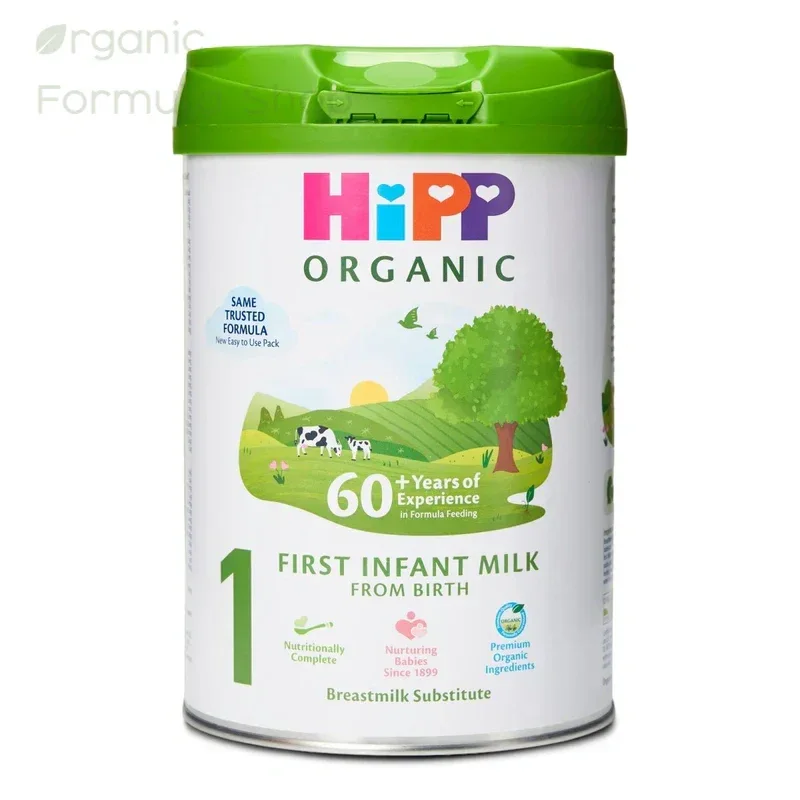
Premium European organic formula beloved for its clean, whole-food ingredients
HiPP Organic has earned a devoted following among parents who prioritize clean, minimally processed ingredients. Its EU-certified organic standards are stricter than U.S. organic regulations, and its probiotic and prebiotic additions support gut health in a way few American formulas match. The import logistics are its primary limitation.
Read the full HiPP Organic review →Pros
- Certified organic with EU standards that prohibit corn syrup, glucose syrup, and many synthetic additives
- Contains prebiotics (GOS) and probiotics (L. fermentum) that closely mimic the gut-supporting properties of breast milk
- Highly digestible whey-dominant protein structure makes it gentle for sensitive newborn digestive systems
Cons
- Must be imported and is not available at standard U.S. retail stores, requiring online ordering with lead time
- Higher per-can price and shipping costs make it one of the most expensive options over time
Score Breakdown
Nutritional Profile9.3Ingredient Quality9.8Digestibility9.4Availability7.8Value8.5 - 4
9.0
~$35/can (14 oz)The first USDA organic formula designed to mirror the WHO infant formula standards
The first USDA organic formula designed to mirror the WHO infant formula standards
~$35/can (14 oz)
- USDA certified organic with no corn syrup, palm oil, or carrageenan — one of the cleanest ingredient lists of any U.S. formula
- Direct-to-consumer subscription model ensures consistent supply without the retail shelf stockout risk
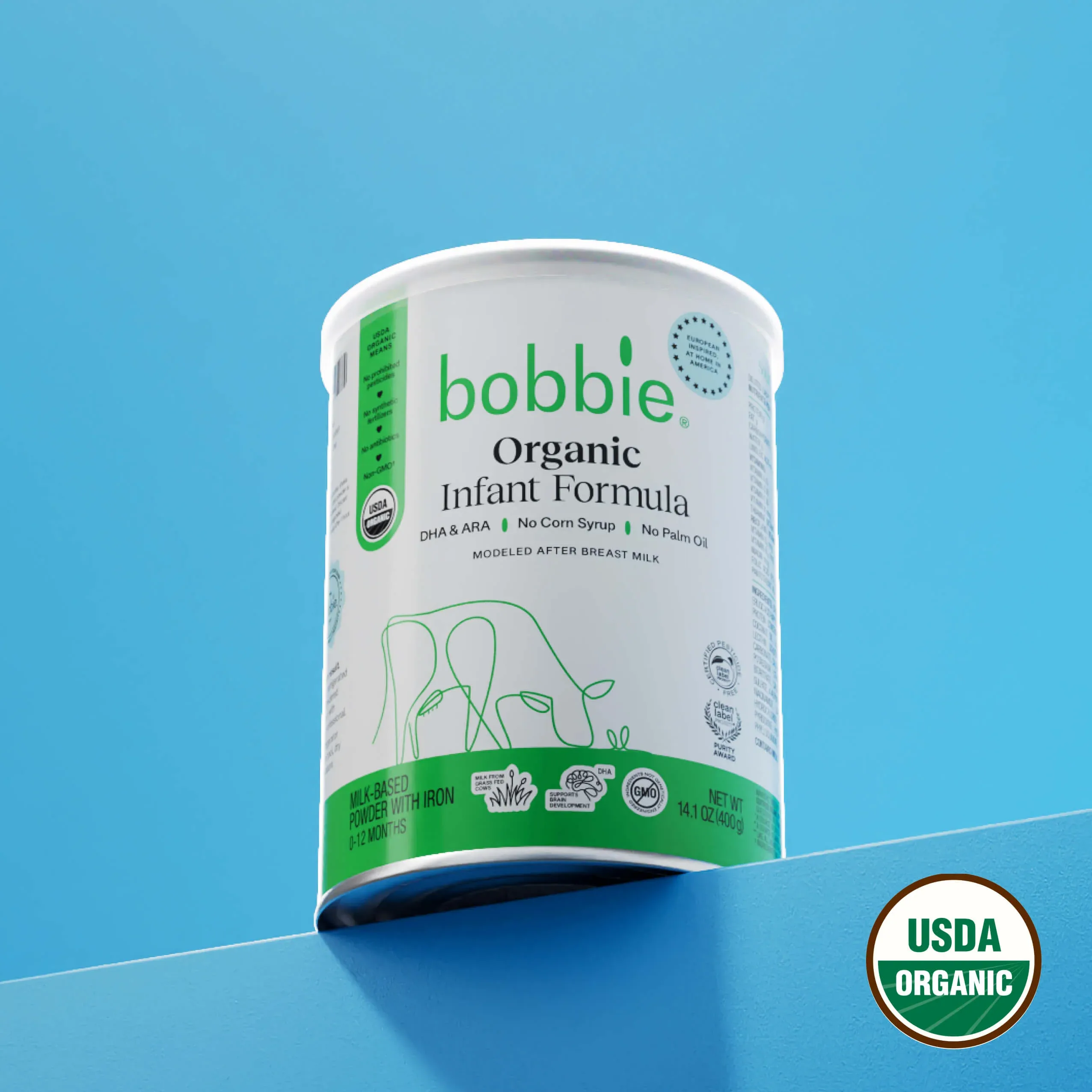
The first USDA organic formula designed to mirror the WHO infant formula standards
Bobbie has disrupted the U.S. formula market by delivering European-style clean ingredient standards without the import hassle. Its USDA organic certification, breast-milk-inspired nutritional profile, and no-compromise ingredient list make it the top domestic organic formula, and its subscription model helps solve the supply reliability problem that plagued U.S. formula in recent years.
Read the full Bobbie Organic review →Pros
- USDA certified organic with no corn syrup, palm oil, or carrageenan — one of the cleanest ingredient lists of any U.S. formula
- Direct-to-consumer subscription model ensures consistent supply without the retail shelf stockout risk
- Whey-to-casein ratio mirrors breast milk, supporting gentle digestion in most newborns
Cons
- Available primarily through the Bobbie website and select retailers, limiting last-minute purchasing options
- Subscription model requires planning ahead — not ideal for parents who need formula urgently
Score Breakdown
Nutritional Profile9.1Ingredient Quality9.6Digestibility9.2Availability8.5Value8.8 - 5
8.5
~$28/can (23.2 oz)Widely available organic formula at the most accessible price point
Widely available organic formula at the most accessible price point
~$28/can (23.2 oz)
- USDA certified organic at the lowest price per ounce of any organic formula in wide U.S. retail distribution
- Available at Whole Foods, Target, Walmart, and major online retailers for convenient purchasing
Widely available organic formula at the most accessible price point
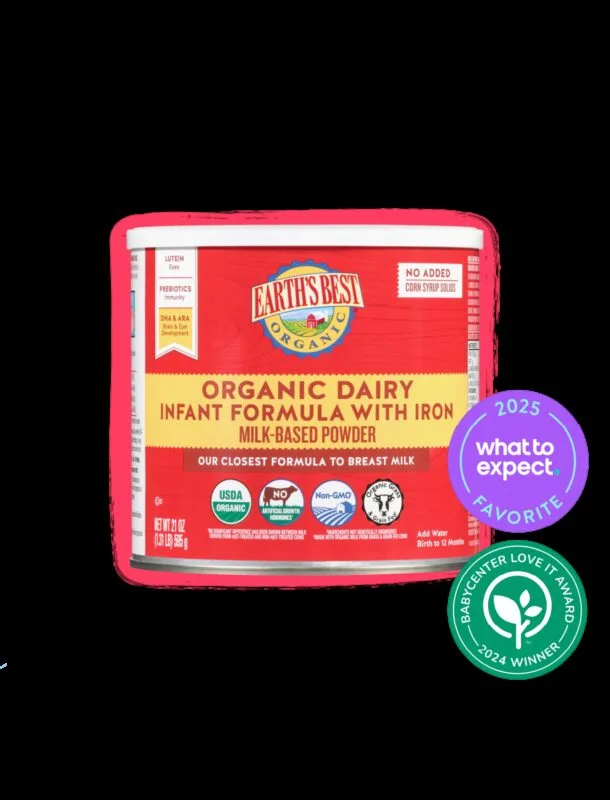
Earth's Best Organic delivers on its core promise: a USDA certified organic formula that parents can find at virtually any major retailer at a price that does not break the family budget. While it lacks the advanced prebiotic and probiotic features of premium imports, its clean organic certification and unmatched retail accessibility make it the best entry point into organic feeding.
Read the full Earth's Best Organic review →Pros
- USDA certified organic at the lowest price per ounce of any organic formula in wide U.S. retail distribution
- Available at Whole Foods, Target, Walmart, and major online retailers for convenient purchasing
- DHA and ARA added from algae and fungal sources with no fish oil, producing less odor and taste aversion
Cons
- Ingredient list includes organic brown rice syrup as a carbohydrate source, which some nutritionists flag as less ideal than lactose
- Does not include prebiotics or probiotics found in premium competitors like HiPP or Bobbie
Score Breakdown
Nutritional Profile8.6Ingredient Quality9.0Digestibility8.7Availability9.3Value9.5
Baby Formula Buying Guide
Why can you trust formula — and how do you choose?
Start with the fact that lowers the stakes: every infant formula legally sold in the United States must meet the FDA’s nutritional and safety requirements — the differences between brands are real but sit on top of a regulated floor. Formula, whether it’s your plan A or your backup, is a safe, complete way to feed a baby. Choosing well is about your baby’s tolerance, your values on ingredients, and the practical matters of availability and cost.
What to look for
FDA regulation as your floor
Every formula sold in the U.S. — store brand or premium — meets the same federal nutrient requirements. Price differences buy ingredient choices and extras, never basic adequacy.
Your baby’s actual tolerance
The best formula is the one your baby digests comfortably. Most babies do well on standard cow’s-milk-based formula; give any formula a fair trial of a week or two before switching, and involve your pediatrician before jumping to specialty formulas.
Ingredient priorities, priced honestly
Organic certification, European-style recipes, specific carbohydrate sources — legitimate preferences that cost real money over a feeding year. Decide which matter to you and let the rest go.
Availability you can count on
The shortage years taught the lesson: pick a formula you can reliably find in your stores and online, and know your acceptable backup. Imported formulas should come only through reputable U.S. channels with proper labeling and storage.
Preparation fit
Powder is cheapest, concentrate splits the difference, ready-to-feed wins at 3am and for newborns when your pediatrician suggests it. Most families run powder plus a small ready-to-feed reserve.
Cost per ounce, not per can
Can sizes vary widely — compute cost per prepared ounce to compare honestly. Store-brand formulas meeting the same FDA requirements cost dramatically less; the AAP considers them nutritionally equivalent to name brands.
Our shortlist of 5
- #1 Similac Pro-Advance — Best Overall
- #2 Enfamil NeuroPro — Runner-Up
- #3 HiPP Organic — Best Value
- #4 Bobbie Organic
- #5 Earth's Best Organic
Related rankings
Frequently Asked Questions
What is the best baby formula?
The best formula is the one your baby digests comfortably and you can reliably buy. Among the five we ranked, Similac Pro-Advance and Enfamil NeuroPro win on U.S. availability; Bobbie and Earth's Best cover domestic organic; HiPP is the European-organic import with supply-chain tradeoffs. All U.S.-sold formulas meet the same FDA nutrient floor. Involve your pediatrician before specialty (hypoallergenic, extensively hydrolyzed) switches.
Is store-brand formula as good as Similac or Enfamil?
Nutritionally, yes — U.S. formula must meet the same FDA requirements, and the AAP is plain that regulated store-brand formula is a sound choice. Pay more for specific ingredients or availability you value, not for the label. Store brands are not on this five-item ranking; that is a gap, not a claim that they failed a test.
How do I switch baby formulas?
For standard cow's-milk formulas, most babies can switch directly. Some gas or stool changes for a few days is normal. Give the new formula one to two weeks before judging. If you are switching because of suspected allergy, blood in stool, or persistent distress, that is pediatrician territory, not brand shopping.
Is organic baby formula healthier?
Organic certification is about how ingredients are produced, not a higher FDA nutrient standard. Bobbie, Earth's Best, and HiPP on our list are organic; Similac Pro-Advance and Enfamil NeuroPro are not and remain widely used complete formulas. Choose organic if that is a family value; do not treat non-organic FDA-regulated formula as inadequate.
Do I need a special formula for gas or spit-up?
Most gas and spit-up is ordinary newborn digestion, not a formula failure. Give a standard formula a fair trial, use paced feeding and burping, and call your pediatrician if there is poor weight gain, projectile vomiting, blood in stool, or marked distress. Specialty formulas exist for diagnosed issues; they are not something this five-item ranking can prescribe.
Our Ranking Methodology
We ranked 5 infant formulas. Criteria: nutritional profile on top of FDA requirements (not instead of them); carbohydrate and fat sources; reported digestibility and when a pediatrician — not a ranking page — should steer you to a specialty formula; U.S. retail or reputable-channel availability; and cost per prepared ounce rather than per can. Store-brand equivalence follows AAP guidance. We did not invent extra formulas or a lab test set we do not have.
Learn more about how we test and score →